

Your septic system works quietly below ground every day, treating household wastewater and helping protect your property. Because most of the system is out of sight, maintenance can be easy to overlook—until slow drains, unpleasant odors, standing water, or sewage backups appear.
Fortunately, responsible septic system care does not have to be complicated. Regular inspections, timely pumping, careful water use, proper waste disposal, and protection of the drainfield can help reduce preventable problems and extend the service life of your system.
This complete homeowner’s guide explains how a septic system works, how to care for it, which warning signs require attention, and when to call a qualified septic professional.
How Does a Septic System Work?
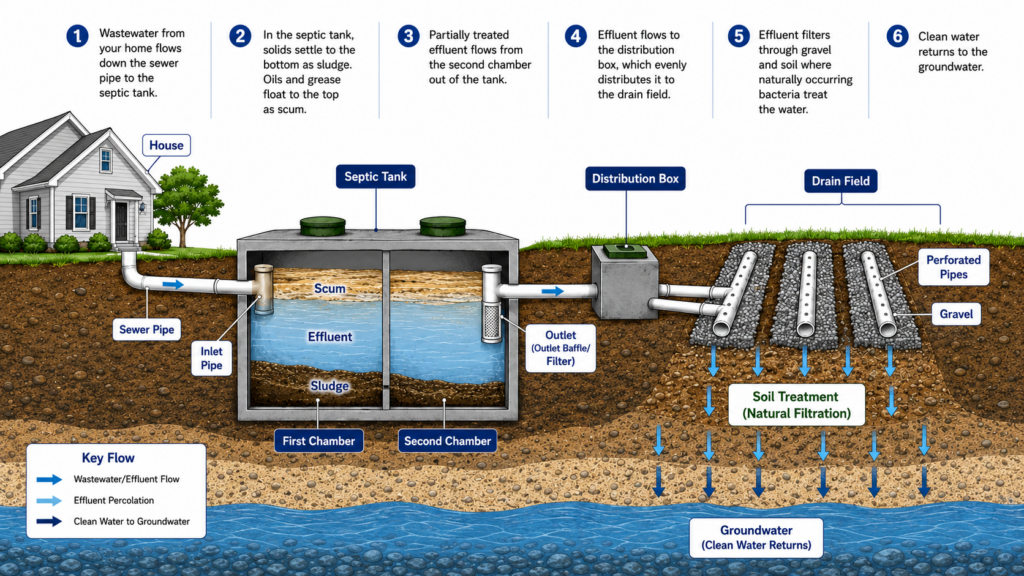
Septic systems operate as a small, on-site sewage treatment plant, consisting of two basic working parts: an underlying septic tank and a disposal field (also known as a drainfield, leachfield, or absorption field). While relatively simple in construction and operation, the septic system provides a variety of essential functions through a complex interaction of physical and biological processes.
Here’s how it works:
- Wastewater flows from the house to the tank.
- The tank provides the initial treatment, working to intercept and separate the solids from the wastewater, passing clarified wastewater (effluent) out to the drainfield for final treatment and disposal.
The drainfield works to purify and disperse the effluent, which filters through the soil and returns to the underlying groundwater, is taken up by plants, and/or evaporates.
Why Septic System Maintenance Matters
A neglected septic system may develop problems gradually. Excessive solids can accumulate in the tank, wastewater can move through the system too quickly, and the drainfield may become overloaded or damaged.
Routine care can help homeowners:
- Reduce the risk of sewage backups
- Identify small problems before they become more expensive
- Protect the septic tank and drainfield
- Avoid unnecessary stress on the system
- Protect groundwater and nearby surface water
- Maintain the value and usability of the property
- Extend the system’s functional life
According to the U.S. Environmental Protection Agency, an average household septic system should generally be inspected at least every three years. Conventional septic tanks are commonly pumped every three to five years, although the correct schedule depends on the household and system. Alternative systems containing pumps, electrical components, or mechanical treatment equipment may require more frequent service. See the EPA’s septic system care guidance for additional information.
Local requirements can vary. Homeowners should follow the recommendations of their septic professional, system manufacturer, and state or local wastewater authority.
The Five Essentials of Septic System Care
1. Schedule Regular Inspections
A professional septic inspection can reveal issues that are not visible from inside the home. Depending on the system, an inspection may include:
- Checking sludge and scum levels
- Examining the tank for leaks or structural damage
- Inspecting inlet and outlet baffles
- Checking the effluent filter
- Testing pumps, alarms, floats, and electrical components
- Looking for evidence of backups or restricted flow
- Evaluating visible drainfield conditions
Keep a written or digital record of every inspection, pumping service, repair, and product application. These records can help a technician evaluate changes over time and may be valuable when selling the property.
2. Pump the Septic Tank as Needed
Pumping removes sludge and scum that cannot safely remain in the tank indefinitely. If too many solids accumulate, they may reduce the tank’s working capacity or move toward the drainfield.
The proper pumping interval depends on:
- Septic tank size
- Number of people in the household
- Volume of wastewater produced
- Garbage disposal use
- Amount of solids entering the system
- Inspection results
- Type and condition of the system
A three-to-five-year interval is a general guideline, not a universal rule. Some households need more frequent pumping, while others may be able to wait longer based on measured tank conditions.
Septic treatments or additives should never be presented as replacements for required pumping.
3. Use Water Efficiently
Every gallon of water entering the home eventually places a demand on the septic system. Large amounts of water arriving within a short period can reduce settling time in the tank and overload the drainfield.
To manage water use:
- Repair leaking faucets and running toilets promptly.
- Install water-efficient toilets, showerheads, and fixtures.
- Spread laundry loads throughout the week.
- Run dishwashers and washing machines only with full loads.
- Avoid taking several long showers back-to-back.
- Do not empty large hot tubs or pools into the septic system.
- Direct sump pumps and roof drainage away from the system.
- Monitor unusually high water bills for possible hidden leaks.
Efficient water use does not mean living uncomfortably. The goal is to prevent avoidable surges that place unnecessary stress on the system.
4. Dispose of Waste Properly
A toilet is not a trash can, and a kitchen drain is not a garbage disposal system for grease or chemicals.
Only human waste and toilet paper should be flushed. Avoid flushing:
- Disposable wipes, including products labeled “flushable”
- Paper towels and tissues
- Feminine hygiene products
- Diapers
- Cotton swabs
- Dental floss
- Cigarette butts
- Cat litter
- Condoms
- Medications
- Household chemicals
- Paint, solvents, gasoline, or motor oil
In the kitchen, avoid pouring fats, cooking oils, grease, coffee grounds, or large amounts of food waste down the drain. These materials can contribute to clogs and increase the amount of solids accumulating in the tank.
Use household cleaners only as directed. Excessive or improper use of bleach, disinfectants, drain cleaners, and antibacterial products may interfere with the biological processes occurring inside a wastewater treatment system.
5. Protect the Drainfield
The drainfield is one of the most important—and often most expensive—parts of a septic system. Once it becomes compacted, saturated, or physically damaged, wastewater may not filter through the soil properly.
To protect it:
- Never park or drive vehicles over the drainfield.
- Do not construct patios, sheds, pools, or additions over it.
- Keep roof drains and surface runoff directed away.
- Avoid planting trees or deep-rooted shrubs nearby.
- Maintain grass or other shallow-rooted vegetation over the area.
- Do not cover the drainfield with concrete, asphalt, or plastic.
- Avoid excessive irrigation over or near the drainfield.
- Know the location of the tank, distribution components, and drainfield.
Never dig in the septic area without confirming the location of underground components.
Drainfield Failure
Today, modern detergents and bleaches kill the natural bacteria necessary for the breaking down and liquefying of all the waste matter in your septic system. With limited amounts of natural bacteria in your septic system, the solid matter builds up and blocks your drain lines and pipes which causes backup and foul odors. After several years of use, a build-up of bottom sludge and floating scum will reduce the effective capacity of the tank, as shown in the diagram below. This means waste passes through the tank too fast, and solids eventually plug the pipes in the drainfield. Either untreated effluent begins surfacing on the ground or sewage backs up into house drains. At this point, the system has failed, and a new drainfield is required–expensive!
Note: The most serious problem with septic systems occurs when sludge and/or scum are carried out into the drainfield. This may cause effluent to resurface or system backup into house drains.
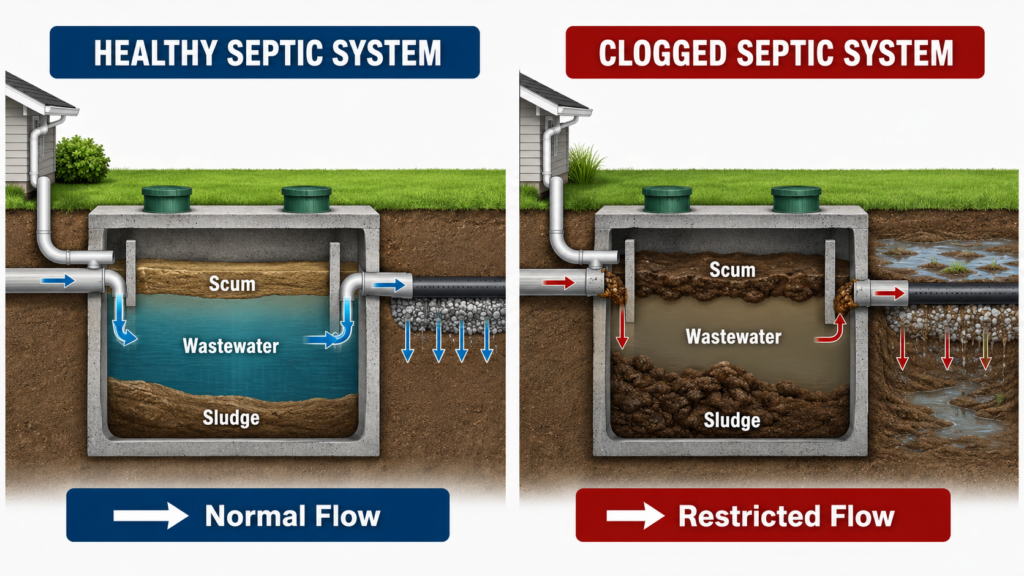
- Scum (at top): cooking fats, oils, grease, soap, scum, other floatable waste material.
- Wastewater (in middle): liquids.
- Sludge (at bottom): solids heavier than water and what is left over after solids have been partially eaten by bacteria. Once sludge gets up to outlet pipe, it enters and clogs drainfield.
See Warning Signs of System Failure.